Communication is at the heart of everything: expressing needs, feeling understood, learning in school, and making friends. When your child is struggling to communicate, it can be isolating for them and worrying for you.
Our speech therapy team works with children from their very first words through childhood and into adolescence, addressing everything from speech sounds and language development to social communication and alternative ways to communicate. We partner closely with families throughout the process, so you always feel informed, involved, and confident supporting your child at home.

We help children understand what is said to them and express themselves more clearly. Our therapists build vocabulary, sentence structure, and the confidence to communicate both verbally and non-verbally.

Pragmatic language is the social side of communication, covering skills like starting a conversation, taking turns, staying on topic, and reading unspoken cues like tone of voice and body language. We help children develop these skills so they can connect with others in ways that feel authentic and manageable for them.
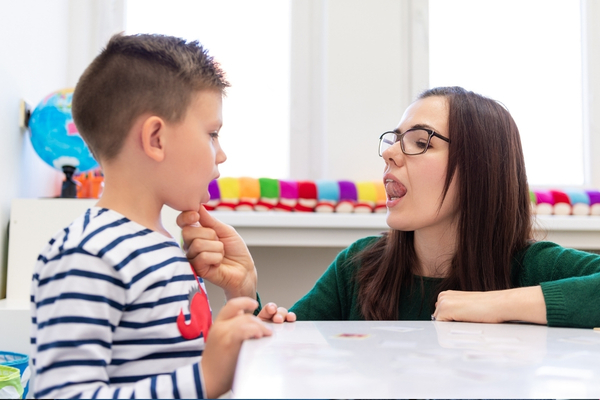
We help children produce speech sounds more clearly and accurately, from early speech patterns to longer, more complex words. The goal is for your child to be easily understood at home, at school, and with friends.
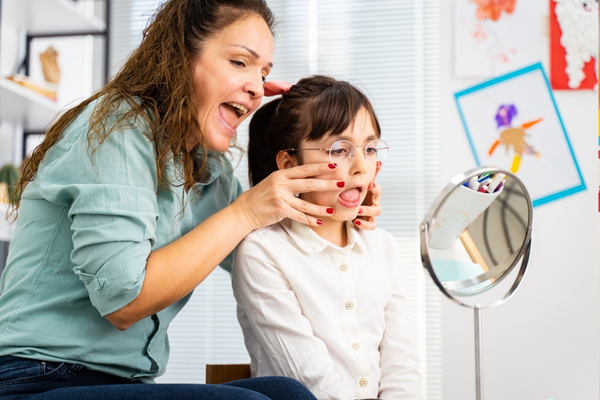
We help children speak more smoothly and fluently by reducing stuttering and building practical strategies for school, conversations, and everyday life. The result is greater confidence to communicate in any setting.

For children who benefit from alternative ways to communicate, we offer AAC assessments and support to help them find the right tools and use them effectively at home, at school, and with peers
Some signs to look for include difficulty being understood by others, limited vocabulary for their age, trouble following directions, frustration when trying to communicate, avoiding conversation, or stuttering. If you have any concerns about your child’s communication development, reaching out for an evaluation is always a good first step.
Our speech therapists work with children who have a wide range of diagnoses and needs, including Autism Spectrum Disorder (ASD), childhood apraxia of speech, language delays and disorders, Down syndrome, cerebral palsy, hearing loss, and fluency disorders such as stuttering. If you are not sure whether speech therapy is the right fit for your child, we are happy to talk it through. Just reach out.
You do not need a referral to contact us or schedule an evaluation. If you plan to use your insurance to cover speech therapy services, your insurance plan may require a physician referral. If you do not have a referral or prefer not to use insurance, we also offer private pay services. We are happy to help you figure out the best path forward.
Progress depends on your child’s goals, the nature of their communication needs, and how they respond to therapy. Some children reach their goals in a few months; others benefit from ongoing support. Your therapist will review progress with you regularly and adjust the plan as your child grows.
Some families also find that episodic care is a good fit. This means your child receives a focused period of therapy, takes a break, and returns when new goals emerge or new challenges come up. Rather than open-ended weekly sessions, episodic care allows your family to engage with therapy intentionally and pick back up as your child’s needs evolve over time.
Yes. Many children receive both school-based and clinic-based speech therapy at the same time. School-based services focus specifically on helping your child access and participate in their educational environment, which means the goals are tied to what your child needs to succeed in school. Clinic-based therapy can address a broader range of communication goals that go beyond the classroom, such as social communication at home, communicating with family members, or building skills that will matter outside of school as your child grows.
If speech therapy is deemed medically necessary, your insurance plan may cover clinic-based services even if your child is already receiving school services. The two are not mutually exclusive, and having both in place can be a significant advantage for children with more complex communication needs. If you are not sure whether clinic-based therapy would add value for your child on top of what the school is providing, we are happy to talk it through.
Learn what to expect when you start services at Whole Child Therapy, from your first call to your child’s first session.