Not every child communicates or learns the same way, and for some, specialized tools and technology can open doors that might otherwise feel out of reach. Augmentative and Alternative Communication (AAC) helps children who need support expressing themselves find reliable ways to communicate. Assistive Technology (AT) helps children work around challenges with reading, writing, and accessing their education.
If you are not sure which one applies to your child, you are in the right place. Read on and reach out if you have questions — we are happy to help you figure out the right next step.
AAC refers to the many different ways a child can communicate when verbal speech alone is not enough. This can range from low-tech options like picture cards and communication boards to high-tech speech-generating devices. Some children use AAC as their primary way tocommunicate; others use it alongside speech to fill in the gaps. AAC is for any child who needs support communicating, regardless of how much verbal speech they have.
Our speech-language pathologists conduct AAC assessments to identify the systems and strategies that best match your child’s communication style, needs, and environment. Following the assessment, you will receive a written report with clear recommendations. If a device or system is recommended, our team will help navigate the funding process, which typically aligns with whoever funded the assessment — insurance, the Regional Center, or the school district.

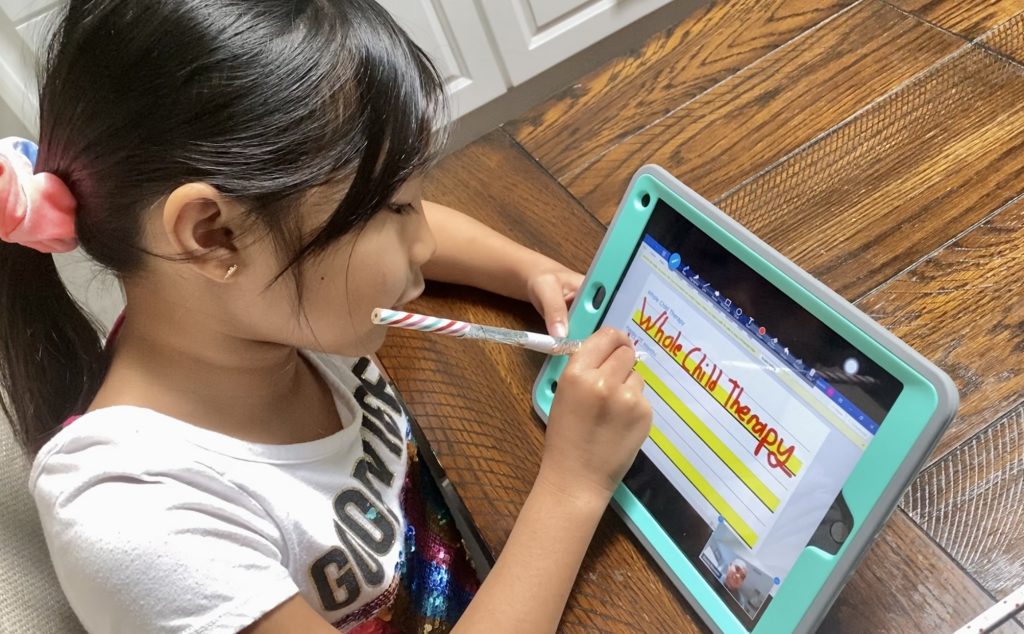
Assistive technology is any device, software, or tool that helps a child work around their challenges and participate more fully in daily life and learning. AT can be low-tech, like a pencil grip or a slanted writing board, or high-tech, like text-to-speech software or word prediction programs.
AT assessments are most commonly requested as part of the school-based IEP process. If yourchild’s school team has recommended an AT assessment, or if you believe your child could benefit from assistive technology at school, we can help. Learn more about our school-based AT services and how to get started.
This is one of the most common concerns families have, and the research is clear: AAC does NOT prevent speech development. In fact, having a reliable way to communicate often reduces frustration and can support the development of verbal speech over time.
For AAC, some signs that an assessment may help include using little or no verbal speech, being difficult to understand by people outside the immediate family, or struggling to communicate needs and thoughts consistently. If your child has a reliable way to communicate some of the time but hits walls in certain situations, AAC may also be worth exploring.
For concerns that are more focused on accessing schoolwork, reading, writing, or learning, AT may be the better fit — visit our School Services page to learn more about that process.
AAC assessments focus on your child’s functional communication needs rather than a specific diagnosis. If you have questions about what your insurance requires, we are happy to help you find out.
AAC assessments may be covered by your insurance plan depending on your coverage and your child’s needs. We recommend contacting your insurance provider to ask about coverage before getting started. AT assessments are typically funded through the school district as part of the IEP process rather than through insurance. We are happy to help you figure out the right path forward for your child.
The timeline varies depending on the scope of the assessment and your child’s needs. We will walk you through what to expect when you reach out.
Learn what to expect when you start services at Whole Child Therapy, from your first call to your child’s first session.