Fine motor skills are the small, precise movements of the fingers and hands that allow your child to write, cut with scissors, open a lunch box, or tie their shoelaces. These skills depend on age-appropriate development of the larger physical foundations, like core and shoulder strength, which give the arm and hand a stable base to move from. Here is what you can expect from your preschooler’s fine motor development.
2 Years Old
- Holds a crayon with thumb and fingers pointed toward the paper
- Imitates vertical lines
- Places a circle, square, and triangle in a puzzle board
- Builds a tower with 4 to 6 blocks
- Snips with scissors
3 Years Old
- Imitates horizontal lines, a cross, and a circle
- Puts together simple puzzles
- Strings small beads
- Cuts on a wide line with scissors
- Unbuttons large buttons
- Builds a tower of 9 blocks or more
4 Years Old
- Copies a square and diagonal lines
- Cuts a circle and square with scissors
- Spreads glue on paper and sticks it to another paper
- Draws a stick person
- Has a clear hand preference
5 Years Old
- Grasps a pencil correctly
- Draws a picture with at least 3 objects
- Cuts more complex shapes
- Begins to print their name
Tips to Promote Development
Arts and crafts. There is a good reason preschool is full of arts and crafts. All that tearing, gluing, bead-stringing, and lacing builds the strength and dexterity that fine motor skills depend on.
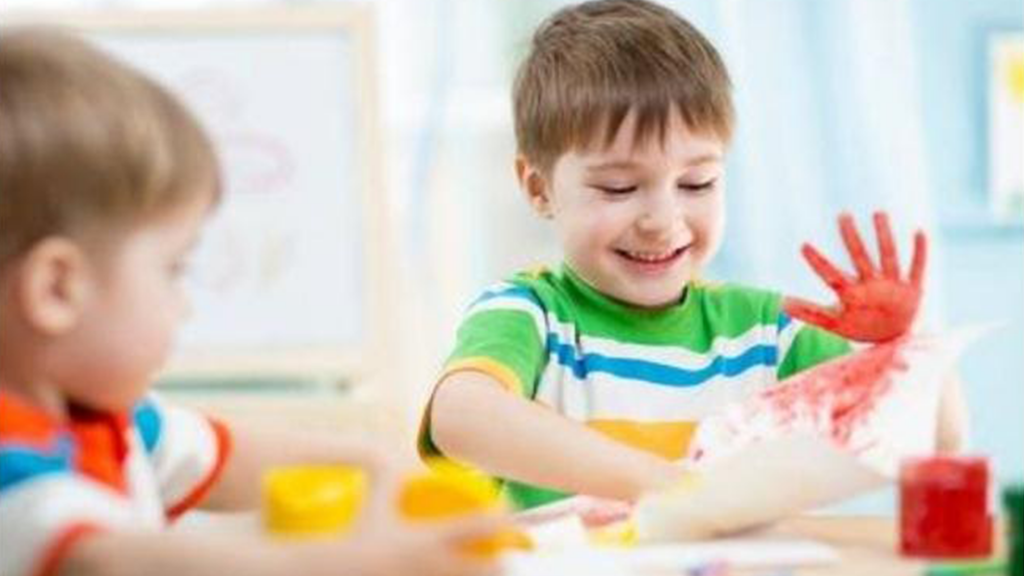
Tactile play. Messy, hands-on play is genuinely important for development. Digging in sand, finding hidden toys in shaving cream, and finger painting all support your child’s tactile system, which in turn helps them control fine motor movements more precisely.
Build proximal strength. Strong shoulder and arm muscles give your child the stability they need for fine motor work. Wheelbarrow walking, crawling through tunnels, climbing, and playing tug-of-war are all great ways to build proximal strength while having fun.
Build hand strength. Activities that involve squeezing and pulling help strengthen the small muscles of the hand. Spray water bottles, sculpting with playdough, and building with Legos are favorites that are both fun and useful.
Every child develops fine motor skills at their own pace, and these milestones are guidelines rather than deadlines. If you have concerns about your child’s fine motor development, our occupational therapy team would love to help.