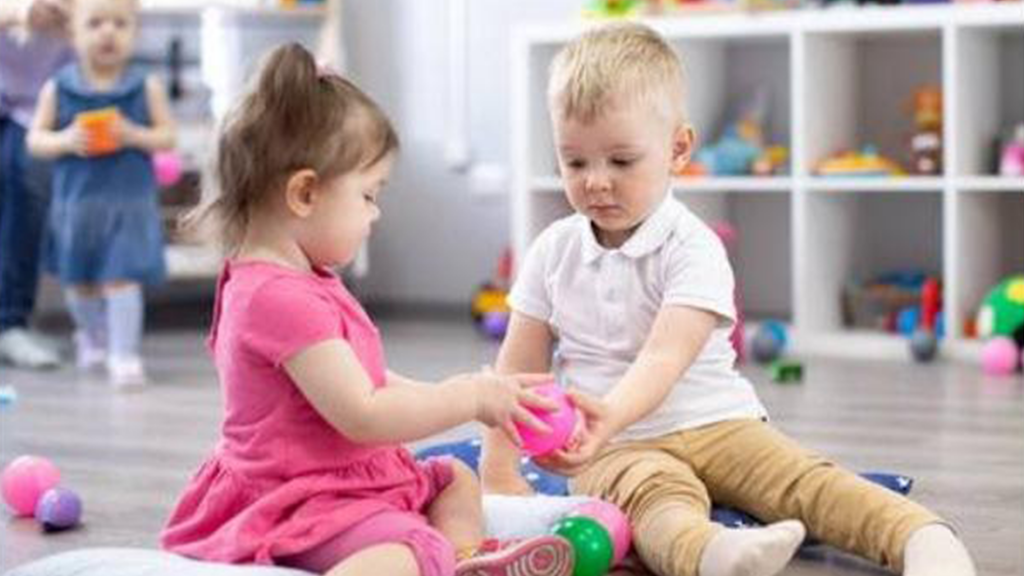
Preschoolers are learning to talk about their feelings and the feelings of others. Social-emotional development involves more than expressing emotions, though. It also includes taking turns, following routines, interacting with peers, building meaningful relationships, managing big emotions, and developing a positive sense of self. These skills lay the foundation for how children show up at home, at school, and in the world.
2 Years Old
- Shows a wide variety of emotions
- Pretends with a doll or stuffed animal
- Looks at people when speaking to them
- Can be shy with strangers and in new situations
- Plays alongside peers (parallel play)
- Shows independence
3 Years Old
- Demonstrates awareness of class routines
- Plays with another child
- Responds to and gives greetings
- Begins to take turns
- Interacts appropriately during group activities
- Plays interactive games like Ring Around the Rosie and Hide & Seek
4 Years Old
- Talks about their own feelings
- Engages in cooperative play
- Plays simple games according to the rules
- Comforts playmates in distress
- Quiets down after active play and waits for instructions
- Begins to use words to express feelings before acting on them physically
- Offers an item or activity in exchange for another
5 Years Old
- Offers help to others
- Stays in designated play areas
- Accepts when a routine has to change
- Tries new activities
- Plays group games and follows the rules
- Stays calm when small requests are denied
Tips to Promote Development
Talk about feelings. You can support your child by labeling emotions, both yours and theirs. “You look sad that there are no more cookies. That would make me feel sad too.” This helps your child build a vocabulary for their feelings and starts to teach them that other people have feelings too.
Set kind, clear boundaries. Children benefit from clear limits paired with empathy. “It is okay to be angry, but it is not okay to hit when you are angry.” Once everyone is calm, help your child problem-solve what they could do next time they feel that way.
Play self-control games. Did you ever play Red Light, Green Light or Freeze Dance as a child? Games like these are great for building self-control. Make it more challenging by switching up the rules every so often.
Every child grows into these skills at their own pace, and these milestones are guidelines rather than benchmarks. If you have concerns about your child’s social-emotional development, our occupational therapy team can help. We also offer enrichment programs where children can practice social skills alongside peers in a low-pressure setting.